
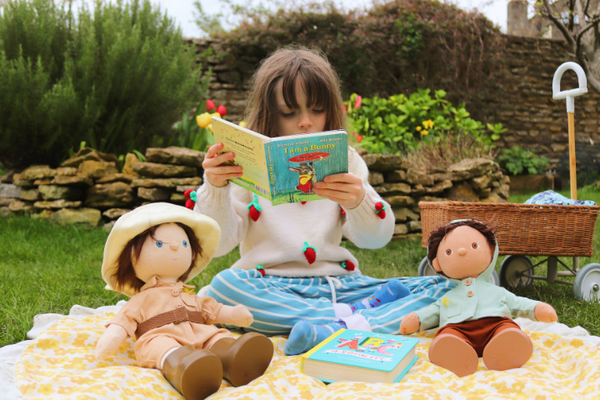
Some of childhood's biggest moments happen through play.
A tea party becomes a chance to practise kindness. A trip to the pretend doctor makes tomorrow's real appointment feel a little less daunting. A favourite companion listens to every story, every secret and every big feeling along the way.
While children are busy imagining new adventures, they're also learning about themselves and the world around them. Those everyday moments of play can help build confidence, resilience and emotional connection in ways that feel completely natural.
Making sense of big feelings
Children experience all sorts of emotions long before they have the words to explain them.
Excitement, worry, frustration, pride, sadness and joy can all arrive in a single afternoon. Through imaginative play, children find gentle ways to explore those feelings at their own pace.
A favourite doll might be starting school for the first time. A cuddly companion could need extra reassurance before visiting the doctor. As children create these stories, they're often working through experiences that matter to them, with the freedom to pause, repeat or change the ending whenever they like.
Growing confidence through play
Every adventure brings something new to discover.
Sometimes towers tumble down. Sometimes the picnic gets interrupted by imaginary rain. Sometimes a patient needs one more bandage before they're ready to go home.
These little moments encourage children to keep trying, solve problems and discover that every story can continue in a new way. With each new game, they grow a little more confident in their ideas and a little more willing to explore whatever comes next.
The comfort of a familiar companion

A beloved companion is often there for life's everyday moments.
They come along on family outings, sit quietly at bedtime and join in countless adventures along the way. They might be a patient at the vet one day, an explorer the next or simply a friend who's always ready for another cuddle.
As children chat, care for and imagine stories with their companion, they're finding their own ways to express thoughts and feelings. Those quiet conversations and caring moments become a meaningful part of growing up.
Choosing a companion they'll love
The companions children treasure most are often the ones that feel full of possibility.
A doll, a cuddly creature or a favourite animal with their own name and personality gives children somewhere to begin, while leaving plenty of room for their imagination to take over.
The stories they create soon become part of everyday family life, growing with every cuddle, every adventure and every new memory made together.
Where every story begins

Every friend in Dinkum World arrives with their own name, personality and little story, ready to become part of yours.
Whether they're sharing afternoon adventures, helping with big feelings or joining in bedtime cuddles, every playtime becomes another memory to treasure.
Touch the rainbow over your Dinkum's heart, close your eyes and see where today's story begins.
Meet your new little companion and discover a world of play.