
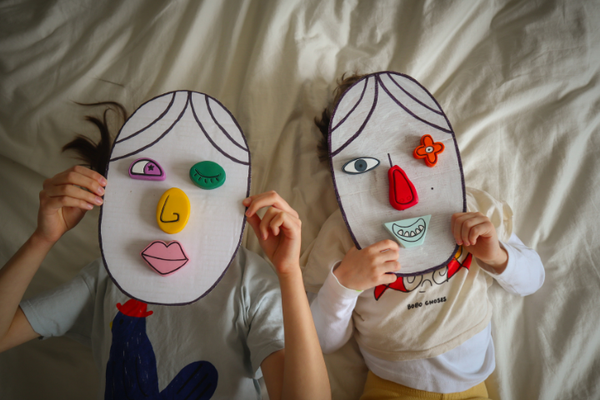
In the early years, children don’t need much to begin exploring the world around them.
A wooden spoon becomes a telephone for important conversations. A soft sponge turns into a bed for a well-loved companion. A handful of stones become stepping-stones across a make-believe river.
With every touch, squeeze and discovery, children are learning how the world feels, one small moment at a time.
What sensory play really means
Sensory play is simply play that invites children to use their senses as they explore.
It might be the feeling of soft fabric between their fingers, the crinkle of paper during a game, the bright colours of a favourite toy or the comforting weight of a well-loved companion being carried from room to room.
Sometimes it’s loud and busy. Sometimes it’s quiet and calming. Often it’s both, all in the same afternoon.
It’s through these small, everyday moments that children begin to understand the world in a way that feels natural and immediate.
How sensory play supports early development
Sensory play weaves itself quietly through many areas of early learning.
As children explore different textures, sounds and materials, they’re building connections in the brain that support early understanding and curiosity. Every new experience adds another layer to how they see and respond to the world.
It also helps children build strength and coordination through simple actions like squeezing, stacking, pressing or carrying. These small movements eventually grow into the skills they’ll use for writing, drawing and everyday independence.
And perhaps most importantly, sensory play gives children the language to describe what they’re experiencing. A soft fabric feels “cosy”, a rough surface feels “scratchy”, a favourite toy feels “just right”.
These early words often come directly from what their hands and senses are telling them.
A comforting companion in their hands

For many children, a beloved companion becomes part of their sensory world.
The softness of their fur, the weight of being carried, the familiar feel of holding them close - all of it becomes deeply reassuring over time.
Some developmental experts refer to this kind of toy as a transitional object, but in everyday life it’s much simpler than that. It’s a trusted friend who comes along for bedtime, first days, new places and quiet moments in between.
A companion like this offers comfort through touch, helping children feel safe as they explore the world around them.
A world made for little hands and big imaginations
Every texture, every sound and every small discovery becomes part of a larger story.
A fabric draped over a chair becomes a cave for a quiet afternoon. A soft toy becomes a travelling companion. A collection of small objects becomes an entire world waiting to be explored.
Sensory play doesn’t need instructions. It simply unfolds, guided by curiosity and a child’s natural instinct to explore.
Made to be loved, held and explored

Every friend in Dinkum World arrives with their own name, personality and little story, ready to become part of yours.
Designed to be held, carried and loved, they often become part of a child’s sensory world as much as their imaginative one, offering comfort in quiet moments and inspiration in playful ones.
Every cuddle, every texture, every make-believe moment adds another chapter to a story that’s completely your own.
Touch the rainbow over your Dinkum's heart, close your eyes and see where your next story begins.
Meet your new little companion and discover a world of play.