
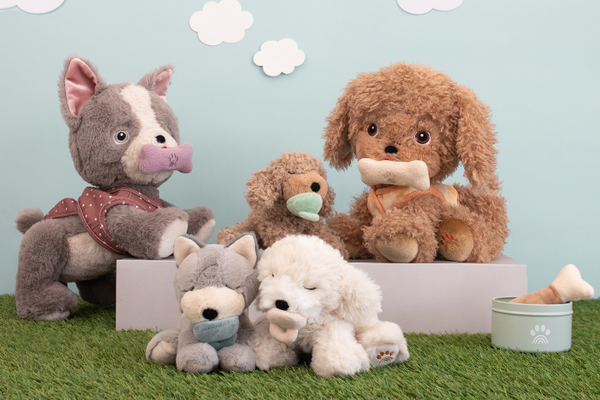
Some days, your little one's favourite companion needs an extra cuddle.
Other days, they're running the busiest veterinary clinic in town, caring for poorly puppies, brave bunnies and magical creatures who need a little help before heading off on their next adventure.
Pretend vet play is full of imagination, kindness and storytelling. Every patient has a tale to tell, and every visit is another chance for children to care, comfort and create a world of their own.
Here are a few ideas to help bring your veterinary clinic to life.
Welcome to the waiting room
Every good vet practice starts with a waiting room.
Line up a few cushions or little chairs and invite every patient to take a seat. Perhaps a puppy has a sore paw, a bunny can't stop sneezing or a tiny dragon's fire-breathing isn't quite working today.
A notebook or clipboard can become the appointment book, where your little vet records each patient's name before deciding who's next to be seen.
Every companion arrives with their own little story, ready for your child to continue.
Gather your vet supplies
You don't need a toy vet kit to create a wonderful afternoon of play.
A wooden spoon becomes a thermometer. A torch transforms into an ear checker. Ribbon makes the perfect bandage, while a bowl of water and a soft cloth are all that's needed to help every patient feel cared for.
Children have a wonderful way of turning everyday objects into exactly what the story needs.
Meet today's patients

Dinkum Pets are always ready for a visit to the vet.
Perhaps a pup has swallowed their favourite magnetic bone, a curious kitty has climbed one tree too many or another furry friend simply needs plenty of rest before their next adventure.
Cozy Dinkums make wonderful patients too. With their own names, personalities and little stories, every companion gives children a new adventure to build upon.
Time for the check-up
Now it's time to welcome each patient into the treatment room.
Your little vet can listen to heartbeats, check temperatures, apply bandages and decide exactly what each companion needs before they're ready to head home.
If you'd like to keep the story going, try asking questions like:
-
What happened today?
-
How can we help them feel better?
-
What will help them recover?
-
When will they be ready for their next adventure?
Children often have wonderfully imaginative answers, and each one adds another chapter to the day's story.
A cosy recovery ward
Some patients might need a little longer before they're ready to leave.
A blanket, a pillow and a quiet corner become the perfect recovery ward, where companions can rest, enjoy an extra cuddle and be checked on throughout the day.
Many children love returning to see how their patients are feeling, making sure everyone's comfortable before they head home.
Home time
Before every patient leaves, they can receive their very own care plan.
A drawing, a handwritten note or a pretend prescription is a lovely way to finish each visit and gives children another opportunity to build on the story they've created.
And if someone needs another check-up tomorrow, the clinic will be ready to welcome them back.
Every adventure starts with a little imagination

Every friend in Dinkum World arrives with their own name, personality and little story, ready to become part of yours.
Whether they're opening a busy veterinary clinic, setting off on a camping trip or enjoying a quiet cuddle before bedtime, every playtime becomes another adventure to remember.
Every check-up, every cuddle and every make-believe moment adds another chapter to a story that's completely your own.
Touch the rainbow over your Dinkum's heart, close your eyes and see where today's adventure takes you.
Meet your new little companion and discover a world of play.